September 12, 2026
Small living rooms tend to get one of two lighting treatments: a single overhead light that makes the room feel like a waiting area, or a tangle of lamps all fighting for attention. Neither is restful. The fix is layering — a handful of lights at different heights, each doing one job, switched on in a deliberate order as the evening goes on. It costs surprisingly little, because in a compact room you need less light than you think. You just need it in more places.
Start With the Ceiling Light, Then Tame It
Nobody reads by candlelight alone. The ceiling light earns its place when you are hoovering, hunting for a plug or carrying in shopping bags. After dark, its job is to be the quietest light in the room rather than the star of it.
If it is on a dimmer, use it — but check the bulbs. A dimmer only behaves with bulbs marked “dimmable”; ordinary LEDs can flicker, buzz or drop out entirely at low settings. If yours hum, replace the bulbs before you blame the switch.
No dimmer, or renting and not allowed to change one? You have options. Fit a smart bulb and control it from your phone. Swap a bare bulb for a large fabric or paper shade that pushes light sideways as well as down, rather than a harsh pool on the carpet. Or simply leave the ceiling light off and build the evening around lamps. Turn it down — or off — until you can barely tell it is on; that is the right level.
Give the Floor a Job to Do
Corners go dark first, and a dark corner makes a small room feel smaller. A floor lamp placed in the gloomiest corner, angled towards the wall or ceiling, bounces soft light back into the room and quietly stretches the space.
Where to put it matters more than which one you buy. Beside an armchair, the shade should sit roughly at shoulder height when you are sitting, so the light falls onto your book or lap rather than into your eyes. An arc or leaning lamp is a good choice in tight rooms because it takes up almost no floor space while throwing light into the middle of the room, where you actually sit.
One rule worth keeping: never put the floor lamp beside the brightest spot. Put it where the room is dullest.
Table Lamps Do the Heavy Lifting
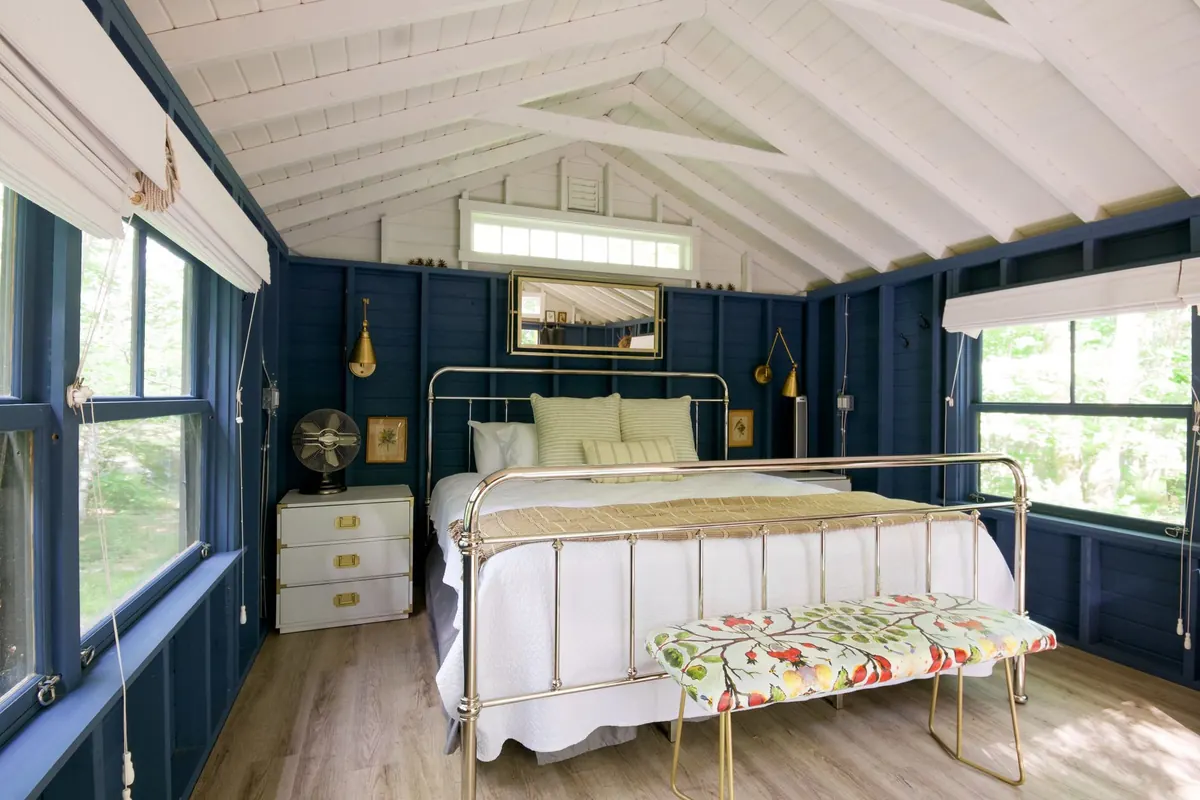
Two modest table lamps beat one large one almost every time. A lamp on a side table, a second on a windowsill, a third squeezed onto a shelf: each creates its own small pool of light, and the gaps between them are what make the room feel cosy rather than lit.
Mismatched lamps are fine. Keep them related by shade colour and bulb warmth, and they will read as a set. Shade height is the detail most people get wrong — if you can see the bulb when you are sitting down, the shade is too small or the lamp is too tall.
- One light within reach of every seat. Nobody should have to cross the room to switch a lamp on or off.
- Nothing above eye level when seated. Light at eye height creates glare; light below it creates atmosphere.
- A solid or opaque shade beside the television. It stops the screen reflecting in your lamp and keeps film nights comfortable.
- A slim lamp on a narrow surface. A small base and a tapered shade will fit a windowsill where a chunky ceramic lamp will not.
Get the Bulbs and Brightness Right
This is the least glamorous step and the one that changes the most. Warm white bulbs, around 2700K, suit living rooms; anything labelled cool white or daylight will make even a well-layered scheme feel like a dentist’s waiting room. If the packaging only lists lumens, go lower than you expect and dim from there.
Think in three levels of brightness rather than three types of fitting:
- Ambient — the dimmed ceiling light or a corner uplighter, just enough to move around safely.
- Task — one brighter, directional lamp for reading, sewing or paperwork, aimed where you need it.
- Accent — low, warm points of light on shelves, sills and side tables that add depth without adding brightness.
Mixing the three is what stops a small room looking flat. If everything is switched on at the same strength, you have simply recreated the overhead light in four places.
Small, Low Lights Add Depth
Low-level light is where a compact room gains its warmth. A short lamp on a bookshelf, a plug-in wall sconce above an armchair, a string of warm-white fairy lights along a picture rail, a storm lantern with a candle in it: these do very little for visibility and a great deal for mood.
Spread them vertically as well as around the room. A light near the floor, one at seat height and one higher up on a shelf gives your eye three planes to read, which makes the room feel deeper than it is. Keep candles away from curtains and soft furnishings, never leave them burning in an empty room, and blow them out before you fall asleep on the sofa.
Layer for the Three Ways You Use the Room
Most living rooms have three evening modes, and each deserves its own combination.
Arriving and tidying up
Ceiling light on full, floor lamp on, table lamps off. Bright, brief and functional.
Film night
Ceiling light off. One lamp on the far side of the room from the screen, or a soft light behind it, plus a floor lamp turned down low. Avoid a lamp directly beside or in front of the television, which creates glare on the screen.
Reading and conversation
Ceiling light off or almost off. Your reading lamp on properly, the corner floor lamp low, one or two small accents glowing elsewhere. This is the setting worth perfecting, because it is the one you will use most nights.
A smart plug or a single switched extension lead makes this effortless: one tap brings up the whole evening layer instead of five separate trips around the room.
What Quietly Ruins the Effect
- Bulbs at different colour temperatures, so one lamp looks yellow and another looks blue.
- Open-topped shades that let you see the bulb from the sofa.
- Every light on at the same brightness, which flattens the room again.
- Visible cables and trailing extension leads, which undo the calm in one glance.
- Spotlights aimed at seating, which create sharp shadows and glare in a small space.
Start With Tonight
You do not need a new lighting scheme to see the difference. This evening, turn the ceiling light off, bring in a table lamp and a floor lamp, and sit exactly where you normally sit. Move each one a few inches until the light falls where you want it and nothing shines in your eyes. That is the whole method.
Over the following week, add a dimmable bulb, then a smart plug, then one small low-level light in the darkest corner. Build the layers a piece at a time, and keep the combinations that make you want to stay in the room a little longer. That is the real test of lighting: not how it looks in a photograph, but how long you are happy to sit under it.