September 15, 2026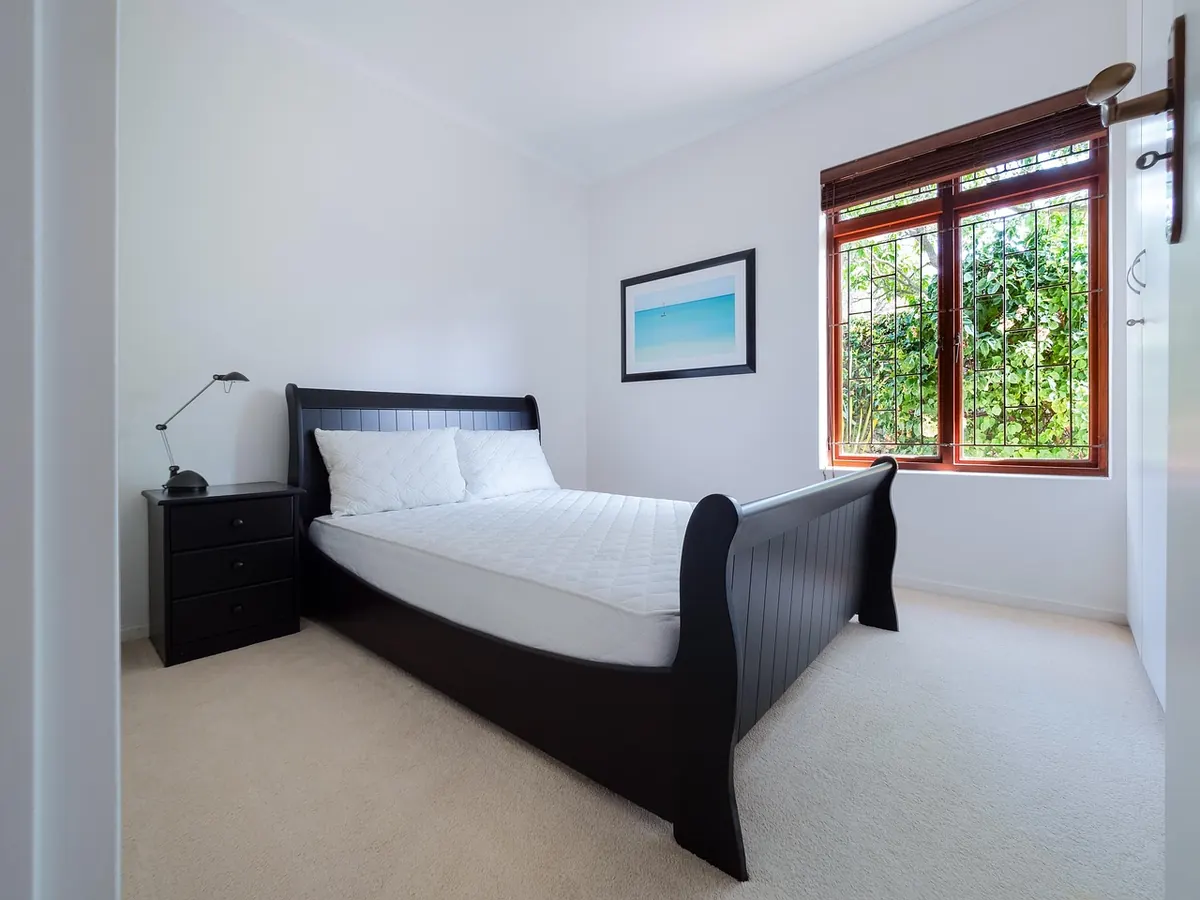
Small bedrooms in British homes are often awkward by design: a box room with one sash window, a ceiling that slopes, a chimney breast in exactly the wrong place. Colour drenching gets recommended as the fix, and it can be. It's also the technique most likely to disappoint if you treat it as one paint decision rather than a way of handling a whole room.
Here's what it involves, how to pick a tone, and how to stop it feeling like a cupboard.
What colour drenching actually means
Drenching means painting every surface in a room in the same colour: walls, ceiling, skirting, architrave, window reveals, door. Often the radiator too. Instead of a white ceiling drawing a line across the top of the room, the tone carries on over your head.
The result isn't "more colour". It's fewer edges. With no sharp break between wall and ceiling, the space reads as a single volume rather than a box with a lid on it.
You can drench exactly — one colour across everything — or work tonally, using two or three shades from the same paint strip. A slightly deeper tone on the woodwork, a fraction lighter on the ceiling. The tonal version is more forgiving, and in a small bedroom it's the one to try first.
Will it work in a small bedroom?
Yes, though not by default, and not in every small room.
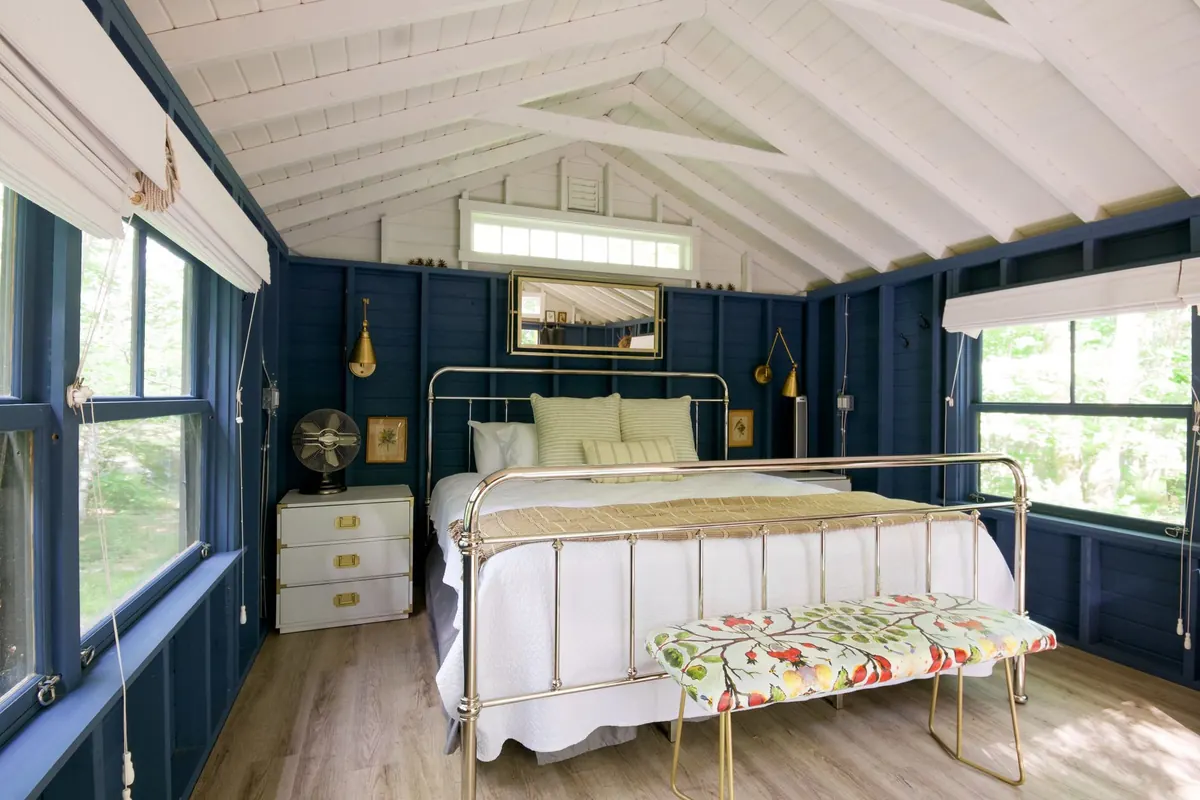
A dark drench can make a small room feel larger than a light one, because contrast is what shrinks a space. No white ceiling pressing down, no bright trim pulling the walls inward. What it needs is light to work with: a reasonable window, a mirror opposite it, lamps on after dark. In a genuinely dark back bedroom with one small window, a deep drench can read as heavy.
Light drenches are the safer route. Sage, oatmeal, soft clay, grey-green, a warm chalky off-white. These smooth the edges without closing anything in, at the cost of drama. If drama is the point, go dark and commit — a half-hearted dark drench, with white trim and a pale ceiling, is just a dark room.
Choosing a tone that won't close the room in
Look at the light before the colour chart
Check the room at 8am, mid-afternoon and 9pm with the lamp on. North-facing rooms take on blue-grey light and make cool colours look colder still. South-facing rooms are warmer and can carry muddier, cooler tones without going flat. Tester pots painted onto sheets of A4 paper, taped to all four walls and left for a few days, tell you more than any app.
Match the undertone, vary the depth
Undertone clash is what ruins a drench. Warm greige walls with cool brilliant white woodwork look fine when a white ceiling sits between them; remove the edges and the mismatch is glaring. Keep every product in the same undertone family — walls, trim, ceiling, radiator — even when the shades differ in strength.
Decide how far you'll go
- One small window: mid to light tone, tonal drench, warm undertone.
- Good window or bay: a richer mid or deep tone across everything.
- Loft or sloped ceiling: one mid tone on walls and ceiling. Sloping planes stop looking awkward once the colour break disappears.
- Renting or undecided: drench one wall and the ceiling together and keep the rest pale. Reversible, inexpensive, and it shows you the effect.
Which surfaces to drench, and which to leave
Work in this order:
- Walls and ceiling. This is the drench itself.
- Skirting, architrave, door, window frames. White trim slices a drenched room into stripes and undoes most of the work.
- Radiator. Paint it in the same tone or replace it. A white radiator against a dark wall is the loudest thing in the room.
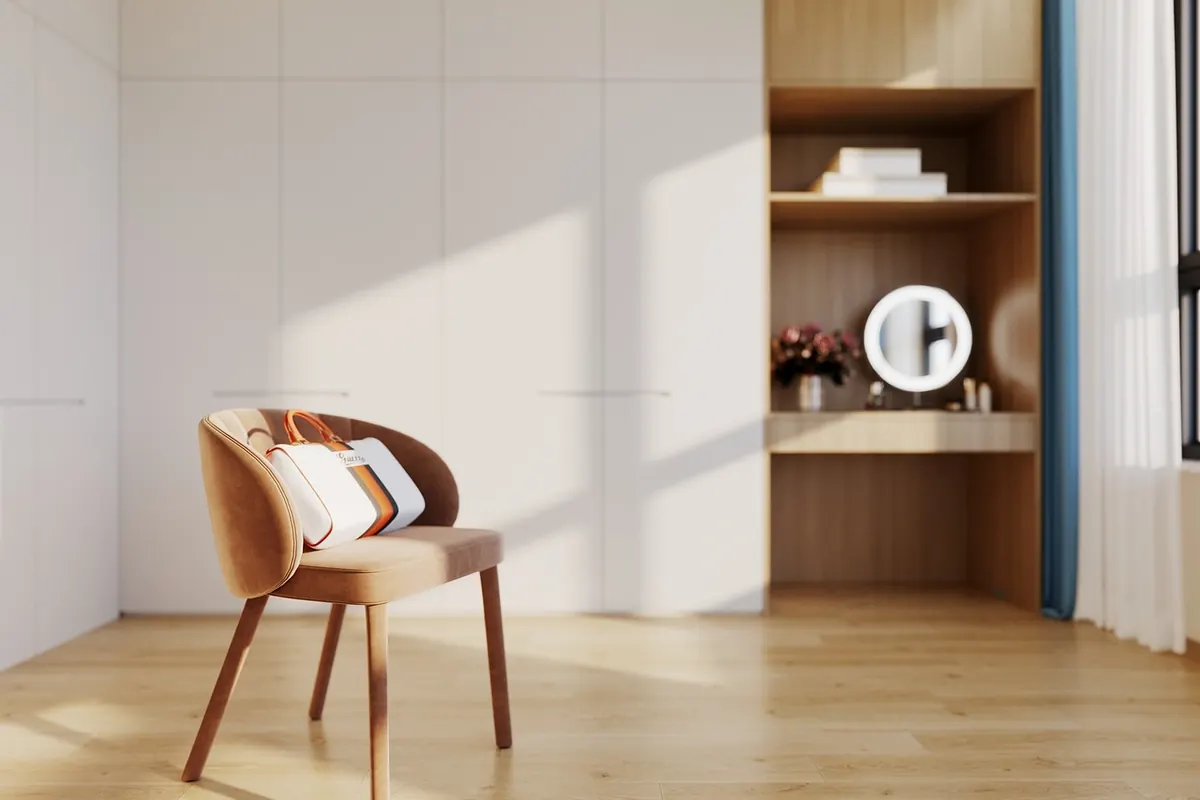
- Built-in wardrobes. Drenching them makes them recede. Check the surface first and use the right primer for MDF or melamine.
- Cornice and ceiling rose. Leave them the same colour. Mouldings read better in shadow than in contrast.
- Floor. Only if you're sure. Matching painted floorboards look sharp, but they show every mark and take real effort to reverse.
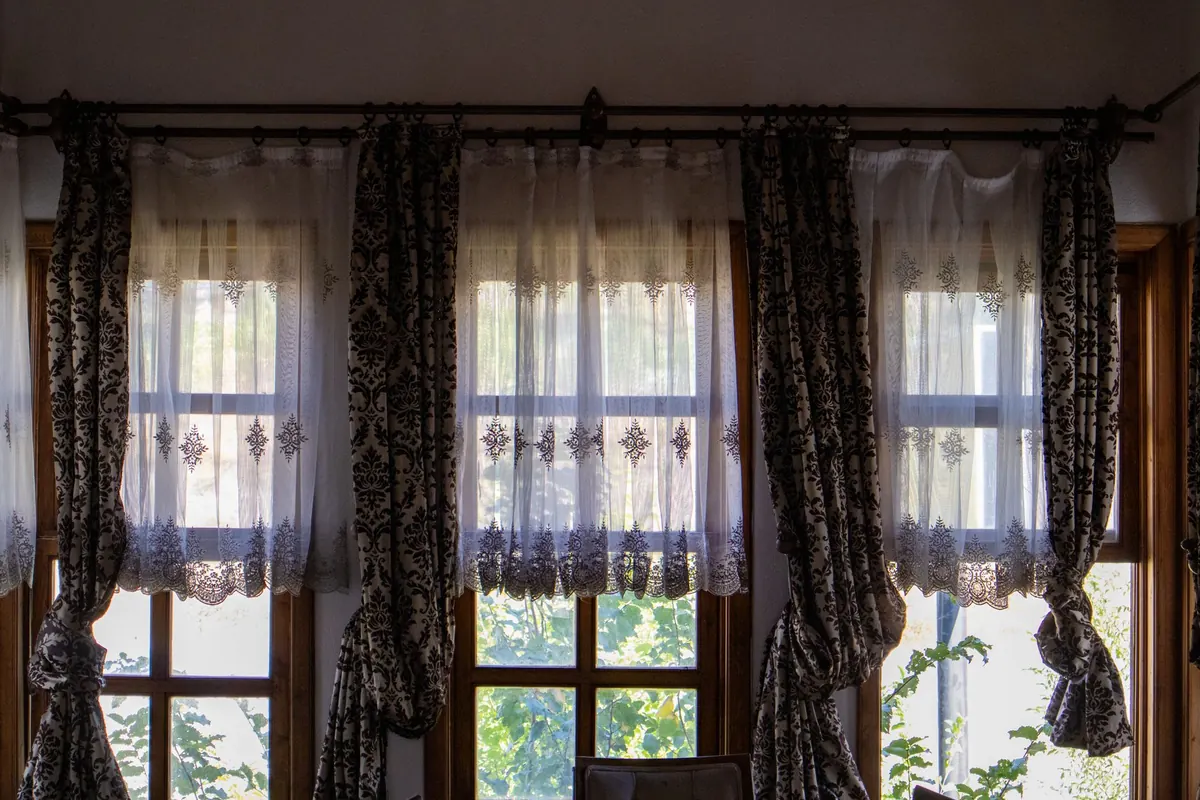
Leave the curtains out of it. Heavy curtains in a colour that fights the walls will break the drench with a hard rectangle of contrast. Choose fabric in the same family, a shade lighter or deeper, and let texture do the work instead.
Keeping it from feeling closed in
Three things make the difference between cocooning and cramped.
- Layer texture, not pattern. Wool, linen, bouclé, a chunky knit throw, a wooden bedside table. In a single-colour room, texture is what your eye reads instead of edges.
- Light at two levels. A ceiling light alone flattens a drenched room. Add wall lights or bedside lamps at sitting height, use warm bulbs, and fit a dimmer if you can.
- Keep furniture low and leggy. A tall wardrobe in a small dark room blocks the light that's doing the work. Where you can, choose pieces on legs and leave some floor visible.
One point of contrast is usually worth having: pale bedding, a light rug, a mirror, or a print with a wide pale mount. One, not five.
A simple plan for a small UK bedroom
Pick one colour you like in the room's actual light. Buy a tester, paint a sheet of A4, tape it up, live with it for a week. Then drench the walls, ceiling and woodwork, paint the radiator, and leave the floor alone.
Add bedding and a rug in tones from the same family, hang a mirror where window light can bounce off it, and put a lamp at each side of the bed. If it still feels tight after a fortnight, the answer is almost always more light or less furniture — not a different colour.
Photo: jeanvdmeulen / Pixabay