September 30, 2026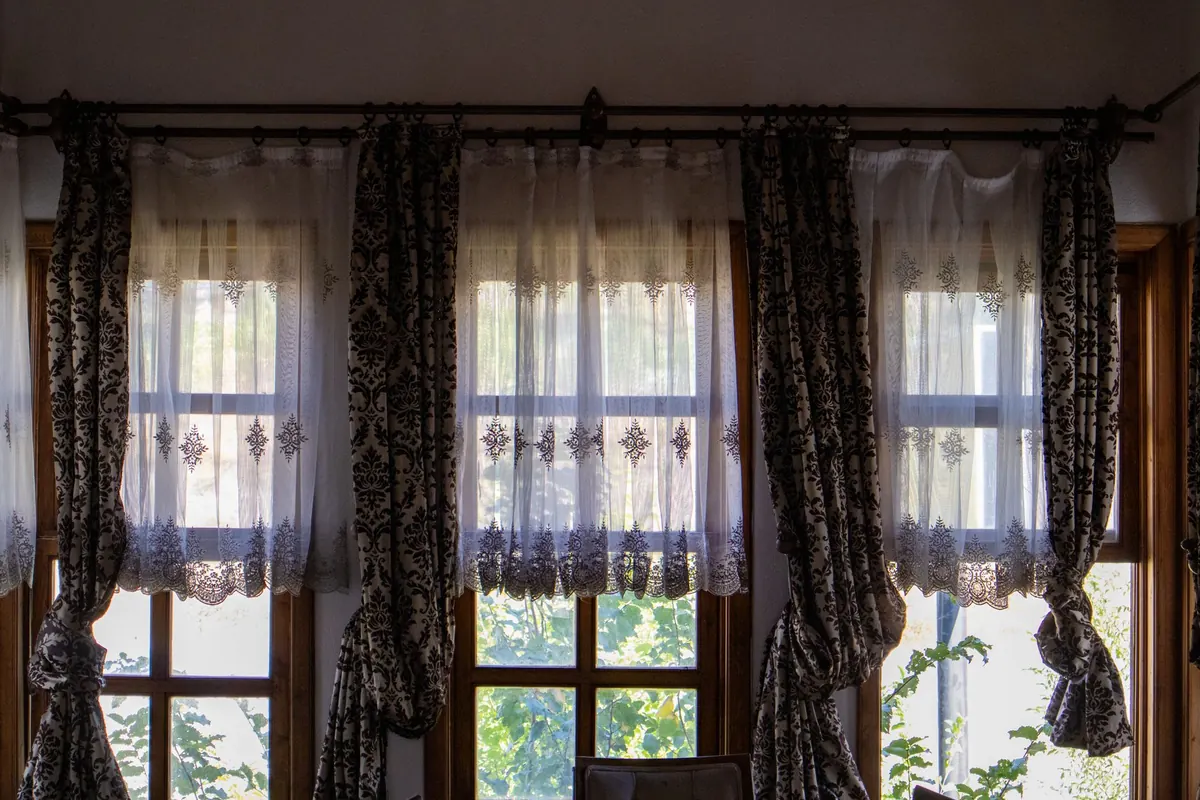
Curtain length is usually the last decision made and the first one noticed. A pair of curtains that stops a few centimetres short of the floor can make a generous room feel unfinished, while the same fabric, hung deliberately to the sill in a small kitchen, looks crisp and considered. Get the drop right and the colour, pattern and lining all have a chance to work.
Length changes the proportions of a room
Curtains are vertical lines, and vertical lines pull the eye upwards. Hanging fabric from near the ceiling to the floor makes a window look taller and a ceiling look higher than it is. A sill-length curtain, by contrast, frames the window honestly and leaves the wall below it visible, which is why it suits smaller rooms and practical spaces.
There is a practical layer too. Long curtains brush past vacuum cleaners, collect pet hair and sit behind sofas. Short curtains keep radiators clear and stay away from sinks, hobs and worktops. Neither choice is better; they simply do different jobs.
Measure the window before you measure anything else
If you can, fit the track or pole first, then measure. The drop — the finished length of the curtain — depends on where the top edge actually sits, and that depends on the pole height and the heading type.
A few general rules help. Poles are often mounted 15–20cm above the window recess and extended 15–20cm beyond each side, so the curtains can be drawn clear of the glass. For fullness, allow roughly two to two and a half times the pole width for a pencil pleat heading, and closer to one and a half to two times for eyelets. With eyelet headings the fabric sits slightly higher than the pole; with pleated headings the top edge sits just below it. Measure from the top of the hook or ring, never from the pole itself.
Ready-made curtains in the UK are usually sold by drop in fixed steps — 137cm, 168cm, 183cm, 229cm and 274cm are common. Knowing your finished drop before you browse saves a lot of disappointment.
Sill length: kitchens, bathrooms and small windows
A sill-length curtain finishes 1–2cm below the windowsill. It keeps fabric away from a hot radiator, stays clear of a sink or draining board, and does not interfere with a desk or a worktop pushed against the wall. In a bay kitchen or a compact bathroom, it is often the only length that makes sense.
Windowsills are rarely perfectly level, so measure at the left, centre and right and take the shortest figure as your guide. Hanging a sill-length pair slightly unevenly is far more obvious than a floor-length pair with a small irregularity.
Apron length: the useful middle ground
An apron-length curtain ends somewhere between the sill and the floor — typically 15–20cm below the sill. It softens a window without the commitment of a full drop, and it works well in bedrooms, dining rooms and home offices where furniture sits beneath the window.
Because the hem floats in open space rather than resting near the floor, small differences in length are much less noticeable. It is also a sensible option if you rent and want to avoid dragging fabric across a carpet you do not own, or if you simply want to keep the lower wall visible.
Floor length: the calm, classic choice
Floor-length curtains suit living rooms, bedrooms and any room where you want the window to feel generous. There are three versions:
- Just off the floor — a 1–2cm clearance. Tidy, practical and easy to vacuum around. The safest choice for busy rooms.
- Touching the floor — the hem kisses the carpet or boards without a break. Elegant, but less forgiving if the floor is uneven.
- Puddling — an extra 5–10cm of fabric pooling on the floor. It looks luxurious in a formal or quiet room, but it gathers dust, needs steaming to stay neat, and is awkward in a hallway or anywhere with traffic.
Measuring for a floor-length drop
- Fit the track or pole at its final height, including all brackets.
- Hang a spare hook or ring at the point where the top of the curtain will sit.
- Measure straight down from that point to the floor. Do not measure at an angle or from the middle of the room.
- Repeat at the left, centre and right of the window and note the shortest measurement.
- Subtract your clearance — 1–2cm for off-the-floor, 0 for touching, or add 5–10cm if you want a puddle.
- Check the figure against standard ready-made drops. If you are between sizes, buying longer and having the hem taken up is easier than trying to add fabric.
For made-to-measure curtains, always give the finished drop and mention the heading type, lining and any interlining, as these all affect how the fabric falls.
Details that catch people out
- Radiators below windows. A sill or apron length keeps fabric off a hot surface and lets heat circulate more freely.
- Bay windows. Measure each section separately and allow extra width where curtains meet at the angles, or they will gape when closed.
- Sliding or patio doors. A floor-length pair with a slight break works well, but make sure the hem is clear of the door track.
- Pets and small children. Low hems collect fur and get pulled; a 2–3cm clearance is a sensible compromise.
- Lining and weight. Heavier, lined curtains hang straighter. Lightweight fabrics can drift and may need a weighted hem.
If you are torn between two lengths, hang the curtains temporarily with clips, look at them in daylight and from the doorway, then decide. It takes ten minutes and saves a rehem.
A quick way to decide
Kitchen, bathroom or small window with a radiator beneath it: sill length. Bedroom, living room or dining room where you want a relaxed, generous feel: floor length, with a small clearance if the room is busy. Anything with furniture against the wall below the window, or a rental where you want to keep things simple: apron length.
Whichever you choose, hang the curtains at the same height across the room, keep hems level, and take your measurements twice before you order. Length is the one thing you cannot fix with a cushion or a lamp, and it is the first thing anyone notices when they walk in.
Photo: Zülfü Demir📸 / Pexels