September 29, 2026
Victorian terraces make up a large share of British housing, and their front rooms arrive with a recognisable set of gifts: tall ceilings, a bay window, a chimney breast, cornicing, and floorboards that have seen more than a century of feet. They also arrive with problems. Rooms that feel dark. Alcoves that swallow whatever you put in them. A nagging sense that a modern sofa looks a bit wrong under all that plasterwork. The answer isn't to strip the room back to a blank box, and it certainly isn't to recreate 1890. It's to style around what is already there.
Start with the room's bones
Before you buy a single cushion, spend an evening working out what is original and worth keeping. Walk the room with a notebook and check the following:
- Cornice, ceiling rose and picture rail — often painted over, rarely beyond saving
- Skirting boards, architraves and door surrounds
- Panelled doors, original handles, hinges and finger plates
- Fireplace, surround, insert and hearth
- Sash windows, their reveals, and any shutters
- Floorboards, and any tiling in the hall beyond
These details do a lot of the styling work for you, and they are almost impossible to replace convincingly once they are gone. Repair before you replace. Fine cracks in cornicing can be filled with decorator's caulk and painted; a tired fireplace usually needs cleaning rather than swapping. Stripping decades of gloss from mouldings is slow, dusty work, so do it one room at a time rather than starting everywhere at once.
Let the fireplace dictate the layout
Most terrace living rooms are arranged around a chimney breast with an alcove on either side. That symmetry is a gift. Use it: a sofa facing the fireplace, two chairs angled towards it, and a rug that ties the group together. If the room is narrow, keep the seating forward of the bay rather than pushed against the walls, which only makes the space feel like a corridor.
Alcoves are the obvious spot for storage, but full-depth cupboards can crowd a small room. Open shelving, around 25–30cm deep, holds books and objects without dominating. Paint the shelving the same colour as the walls so it recedes, and keep the shelf spacing irregular — a grid of identical shelves looks like an office. If the television has to live in the room, a low unit in one alcove beats mounting it above the fireplace, where it sits too high to watch comfortably and competes with the mantel.
Go deeper with colour than you think
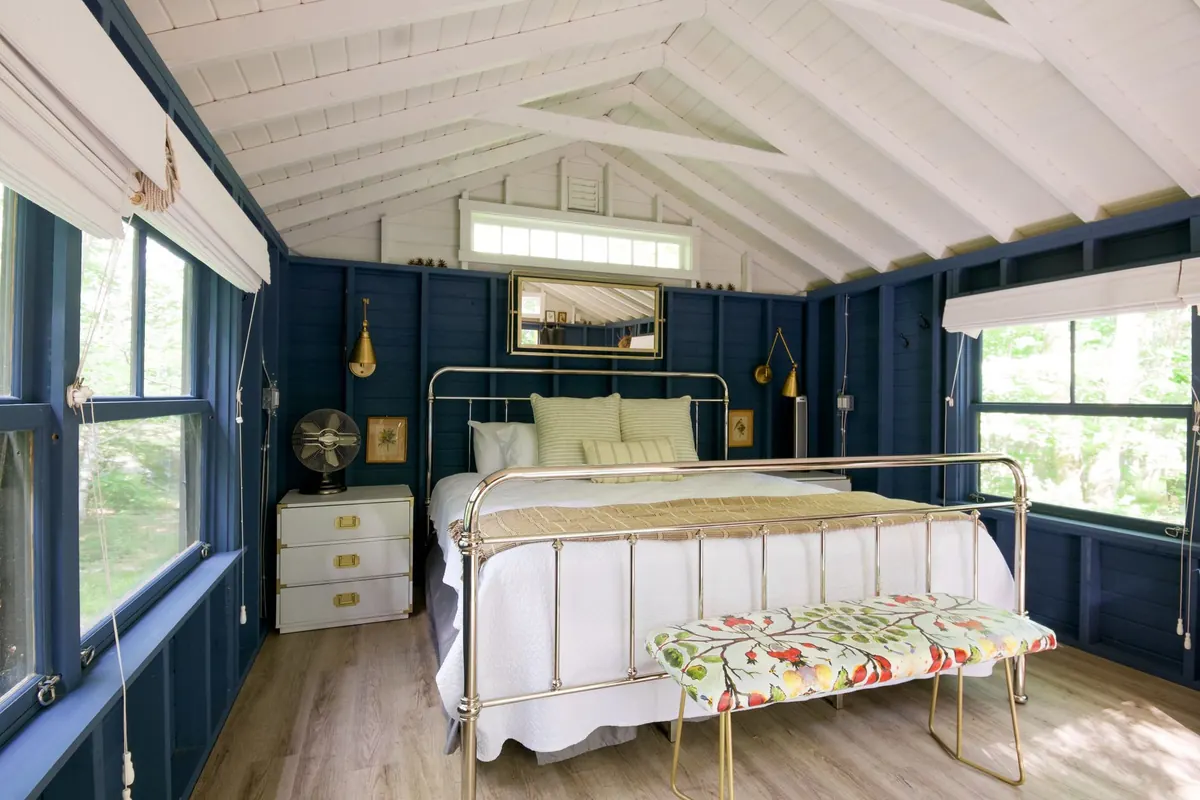
High ceilings and tall windows can carry far more colour than a modern boxy room. This is the single biggest advantage of a Victorian space, so use it. Deep greens, inky blues, earthy reds and warm browns all sit happily against original plasterwork, and they make a room feel intentional rather than unfinished.
A few practical points. North-facing front rooms have cool light, so greys can turn grim — lean warm instead. Painting the alcoves a shade or two darker than the surrounding walls helps them recede. Don't forget the woodwork: skirting, doors and window frames in a deeper tone of the wall colour give a room weight and hide scuffs. Ceilings don't have to be brilliant white; a tint of the wall colour keeps the height from feeling empty, and Victorian ceilings were often tinted rather than pure white. Always test paint on large samples on at least two walls, and look at them in the evening with the lamps on, not just in daylight.
Mixing modern furniture without a fight
Old rooms and new furniture get on best when the proportions are right. Very dainty pieces disappear in a room with three-metre ceilings, while a deep modular sofa can swallow a narrow through-room whole. Look for low-slung sofas with slim arms, chairs that sit on visible legs, and nothing too tall — keeping floor visible is what makes a small terrace room read as generous.
Where to put the sofa
If the room is wider than it is deep, float the sofa across the chimney breast rather than pressing it against the back wall. If it's narrow, run the sofa along one long wall and put an armchair in the bay. A bay is also excellent for a window seat with storage underneath, or a reading chair and a small side table.
Mix eras deliberately. A contemporary sofa with a Victorian chest as a side table, or a mid-century armchair beside a traditional fireplace, looks far better than a matching suite bought in one go. Buy one piece at a time, in a size you've measured with masking tape on the floor first.
Light like the room was built for it
Recessed downlights are the wrong answer here. They puncture original ceilings, get lost in the height, and can't be undone without damage. Instead, layer light at different levels.
A single pendant on a long, adjustable flex lets you drop the light to where it's useful rather than leaving it stranded near the ceiling; two pendants over a long room work even better. Add a picture light above alcove shelving, wall lights either side of the chimney breast, a floor lamp in the darkest corner and a table lamp or two at hip height. Put everything on dimmers if you can — an old room at 30% brightness with the fire on is a different room entirely.
Choose warm white bulbs rather than cool white; the cooler the bulb, the greyer original plaster and paint will look. If wiring is limited, plug-in wall lights and rechargeable table lamps are sensible stopgaps. For any new circuits, use a registered electrician.
Windows, floors and the things you touch
Sash windows are worth repairing rather than replacing — the proportions are a large part of what makes a terrace room feel right. If replacement is the only option, check first whether the property sits in a conservation area or is listed, and speak to your local planning authority before ordering anything.
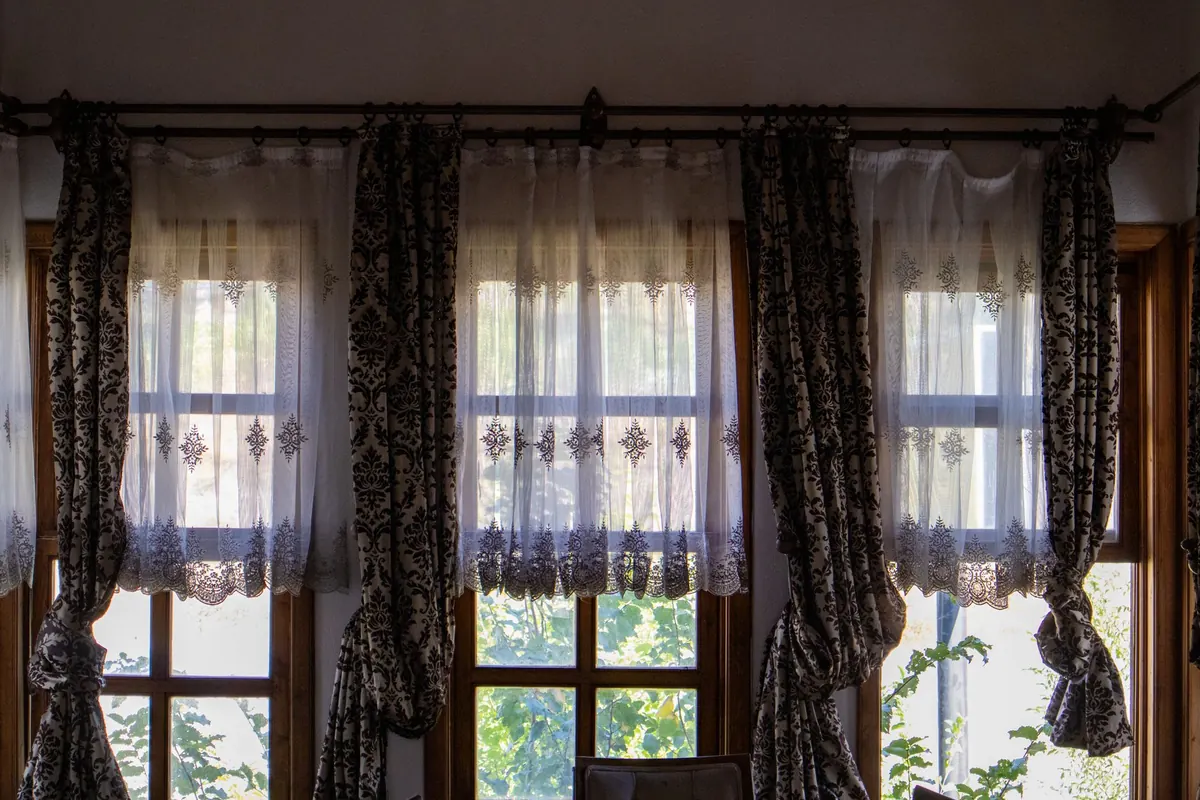
For curtains, fit the pole or track above and wider than the window, ideally wall to wall if the room is small, so the glass stays clear when they're open. Full-length curtains look better than sill-length ones in a tall room. Keep them clear of radiators, or consider shutters, which suit sashes and don't block heat.
Original floorboards are a real asset. Sanded and sealed, they warm up a room immediately, though gaps between boards will be draughty — a thick rug and draught excluders soon sort that. If the boards are past saving, engineered timber or a low-pile wool carpet both work. Layer textiles by weight: a heavy rug, medium-weight curtains, lighter cushions. Skip the clutter; one good lampshade beats five bargain ones.
A practical order of work
- List and repair the original features. Stop there for a week if you can.
- Repaint walls and woodwork before buying furniture, so you're choosing against the real colours.
- Plan the lighting scheme and get any new wiring done at the same time as decorating.
- Live with your existing furniture in the room for a fortnight and note what annoys you.
- Buy the rug and curtains next — they set the scale everything else has to fit.
- Add furniture one considered piece at a time, then the small things last.
Character is the whole point of buying an old terrace, so let the room lead. A little patience with the plasterwork and one confident colour choice will do more for the space than a vanload of new furniture. Where structural work, party walls or new wiring are involved, bring in a qualified tradesperson rather than guessing.
Photo: Orca / Pixabay